
Photo: Janice Williams, Colbert County Tourism & Convention Bureau
One day last year, I was watching the movie Sweet Home Alabama. It was a carefree romantic comedy that I found entertaining. One of the subplots in the movie had to do with the dog named Buddy that Melanie and Jake had when they first were married. He had passed and was buried in Coon Dog Cemetery.
About Coonhound Cemetery
In real life, there was a man named Key Underwood. His dog Troop had loved the camp where they would hunt all the time. In 1937, time had passed and and on Labor Day of that year, Troop crossed the Rainbow Bridge. It turned out his final resting place was Key Underwood Coon Dog Memorial Graveyard, (also known as Coon Dog Cemetery).
Every year, thousands of people from all over come to visit this historic cemetery. The Tennessee Valley Coon Hunter’s Association hosts a celebration at the cemetery on Labor Day every year. Entertainment includes music, dancing, food and a liar's contest.

Photo: Janice Williams
Today, it's a huge tourist attraction and still follows the same selective process of allowing Coonhounds to be buried there. When asked why other breeds of dogs aren't accepted, Mr. Underwood said "You must not know much about coon hunters and their dogs, if you think we would contaminate this burial place with poodles and lap dog." Find out more at the Coon Dog Cemetery website.Coonhounds are a special breed of dog. Known to track raccoons and other similar animals, they are adored by hunters these dogs stand out in the crowd because they will point out the tree the animal runs up instead of just tracking the animal on the ground. There are seven breeds of Coonhounds, all of which are accepted by the UKC and AKC.
Coonhound Varieties

- Black and Tan Coonhound This breed originated from the American Foxhound and the Virginia Foxhound. Later on, part got thrown into the mix. As a result, these dogs are bigger boned and have those trademark black and tan markings. They range in height from 23 to 27 inches (58 to 69cm) and a weight of 50 to 75 pounds (23 to 34kg) for males. Females range in height from 21 to 26 inches (53 to 66cm) and 40 to 65 pounds in weight (18 to 29kg).They are active, fast, courageous and kind.
- American Leopard Hound
- BlueTick Coonhound These dogs are a combination of the English Foxhounds and the French hounds. This intelligent dog is great for families with older children. They are strong, independent dogs who have great speed on the trail. The ideal owner must be a strong pack leader to let the dog know what behavior is acceptable or unacceptable.
- English Coonhound The English Coonhound was originally bred to hunt foxes and raccoons. When the dog arrived in America, American owners bred the dogs to adapt to hunting opossums, raccoons, cougar and bear. This dog is capable of great speed and endurance. They are graceful as well. They have a pleasant and sociable personality.
- Plott Hound The true origin of the Plott Hound is from Germany. Named after Jonathan Plott, these dogs were brought from Germany where they hunted wild boar to England in 1750, where they learned to hunt bears. His son Henry later settled in North Carolina in the early 1800's and to this day, the dog is beloved by the state for its big game hunting. The breed is active, fast, cute, confident alert and courageous. It's an effective treeing dog and loves the water.
- Redbone Coonhound These dogs of Scottish ancestry were bred to hunt bear, cougar and raccoon. The modern-day Redbone hails from Georgia. This agile breed can cover terrains from swamplands to the mountains. They are water dogs who have an even temperment, are affectionate and love to please.
- Treeing Walker Coonhound Treeing Walker Coonhounds were named after Thomas Walker, a man who brought the breed to Virginia in 1742. These breeds were foxhounds that were crossed with Virginia hounds. They are very similar to the Black and Tan Hound. This energetic dog is a favorite among Coonhound lovers for its energy and excellent treeing instinct. Intelligent, active, courteous, composed, confident, fearless and kind, this dog has an extreme endurance and a love for competition.
Photo: Wikipedia

Photo: Coondogs.org
Known for their spotted markings they come in leopard-color, red, brindle, blue and mousy colors. They are roughly the same height as the American Black and Tan Coonhound but their weight is 35 to 65 pounds (16 to 29kg) for females and 45 to 75 (20 to 34kg) pounds for males.
Photo: Wikipedia
Their coloring is mottled with blue markings with their ears tending to be black. Others may have tan markings but blue is the standard coloring. Height for the dogs is 22 to 27 inches (56 to 69 cm) for males and 21 to 25 inches (53 to 64 cm) for females. Weight ranges from 55 to 80 pounds (25 to 36 kg) for males and 45 to 65 pounds (20 to 29 kg) for females.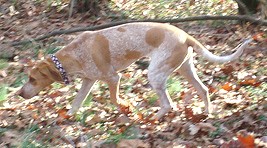
Photo: Wikipedia
The height requirements of the hound are identical to the Bluetick Coonhound. Weight ranges in accordance to height. They come in a variety of colors including: red and white, lemon and white, black and white, redtick, bluetick and tricolor with ticking.
Photo: Dr. Dominik Hessenmöller
The Plott Hound is known for its brindle coloring. You'll never find this dog in a single color coat but any variation of brindle is common. Plott Hounds are approximately 22 to 27 inches (50 to 71 cm) at the withers for males, 21 to 25 inches (53 to 58 cm) for females. Males should weigh 50 to 75 pounds (23 to 27 kg). Females should weigh 40 to 65 pounds (18 to 25 kg).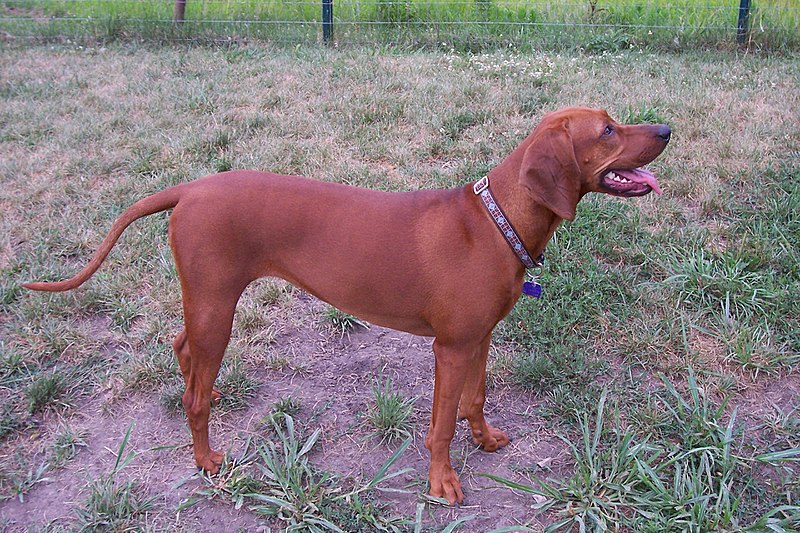
Photo: Wikipedia
This breed is one of the most distinguishable coonhounds because of its lustrous red coat. It used to be a combination of red and black but the black markings were bred out of it. Now, it's common to see an plain red coat or a red coat with a white chest. The height of these dogs are 22-27 inches (56-69 cm) for a male, with females being slightly shorter at 21-26 inches (53–66 cm). Weight should be proportionate to build.
Photo: Wikipedia
The height of these dogs is 22 to 27 inches (56-69 cm) for males, and 20 to 25 inches (50 to 58 cm) for females. Tri-colored are the predominant coloring for the breed. However, it's also common to find these dogs with black and white as well as white with tan.Let's Discuss!
Have you visited this special place? What is your favorite Coonhound?
Learn More About This
Coon Dog Cemetery Website
Colbert County Tourism and Convention Bureau
United Kennel Club
American Kennel Club
Coondogs.org
Sweet Home Alabama (Available From Amazon)

How To Raise And Train A Coonhound by S. Henschel

Reminder: There are only two days left for a chance to win a $40 gift card from CSN Stores. Tell us all about what your dog has destroyed in the comments section.
What My Dog Loves To Destroy


